



How much topsoil do I actually need? This topsoil calculator does the math for you. Enter the area you are covering and how deep you want the soil, and it returns the volume in cubic yards and cubic feet - plus weight in tons, bag count, delivery size and estimated cost - so you order the right amount - not a load too much, not half a yard too little.
1. Select the shape
2. Enter the measurements
3. Options
Soil condition & bag size (optional)
Fill in every measurement with a number greater than zero.
How much topsoil do I need?
To work out how much topsoil you need, measure the area you are covering, choose a depth, then multiply the two to get a volume - and convert that volume into cubic yards, tons or bags so you can order the right amount. The calculator above does it instantly; this is the formula it runs:
length (ft) × width (ft) × depth (in) ÷ 324 = cubic yardsThe 324 is 27 cubic feet per cubic yard multiplied by 12 inches per foot, so it converts feet, inches and yards in one step. Depth moves the final number more than area does — the depth table below sets out what each job needs.
How to use this topsoil calculator
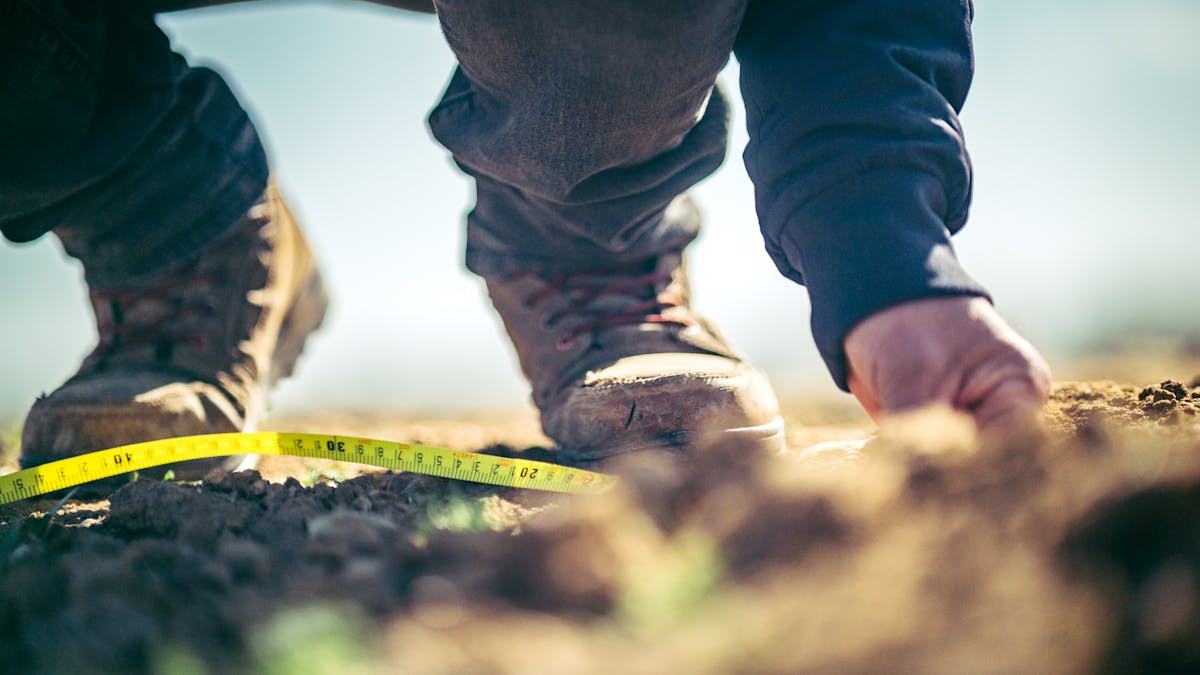
- Measure the area. Length and width in feet. Split an irregular shape into rectangles and add them up. No tape? An adult stride is roughly 2½ to 3 feet.
- Pick the depth. Use one of the presets, or see the depth table below.
- Read the result. Cubic yards is what a soil yard will ask for; tons is what a supplier selling by weight quotes; bags is what you would buy at a garden center.
Worked examples
New lawn from seed — 40 ft × 25 ft
40 × 25 = 1,000 sq ft 1,000 × 4 in ÷ 324 = 12.3 cubic yards +10% settling = 13.6 cubic yards ≈ 15 tonsOne dump-truck delivery. Order 14 yards and keep the extra for the inevitable low spot.
Topdressing an existing lawn — 1,500 sq ft
1,500 × 0.5 in ÷ 324 = 2.3 cubic yards +10% settling = 2.5 cubic yards ≈ 92 bags of 0.75 cu ftRight on the bulk/bag border. If the truck can reach the driveway, take it in bulk.
Filling a low spot — 8 ft × 6 ft, 3 in deep
48 sq ft × 3 in ÷ 324 = 0.44 cubic yards +10% settling = 0.49 cubic yards ≈ 18 bagsWell under any delivery minimum. Buy bags, and fill in two passes of 1½ inches rather than one of three.
Bags, bulk or a truck?
Once you have a figure, the volume itself decides how you should buy it.
| You need | Buy it as | Why |
|---|---|---|
| Under 1½ yd³ | Bags | Soil yards have order minimums and a flat delivery fee that wipes out the saving |
| 1½–3 yd³ | Either | Roughly the break-even. Bulk if the truck can tip somewhere convenient |
| 3–16 yd³ | Bulk delivery | One dump-truck load; 3 yards is already 108 bags to carry and split |
| Over 16 yd³ | Several truck loads | Ask the yard to split the delivery so you can spread between drops |
How deep should topsoil be?
Depth drives the final number more than area does. Too thin and roots never leave the old ground; too thick over an existing lawn and you smother the grass you are trying to help.
| Job | Depth | Why |
|---|---|---|
| Topdressing an established lawn | ¼–½ in | Thin enough that grass blades still show through |
| Leveling a bumpy lawn | ~1 in average | Fill dips in ½ in passes; deeper kills the grass beneath |
| Overseeding bare patches | ½–1 in | Seed-to-soil contact without burying the seed |
| New lawn from seed | 3–4 in | Grass roots want loose, fertile soil to establish into |
| Under new sod | 3–4 in | Rolled and raked level before the sod goes down |
| Flower bed or border | 4–6 in | Room for perennials and shrub root balls |
| In-ground vegetable plot | 8–12 in | Carrots, parsnips and potatoes need the depth |
| Trees and shrubs | 12 in+ | Backfill depth around the root ball |
| Filling a low spot | Depth of the dip | Measure the deepest point, use the average across the patch |
Filling a raised bed or planter instead of covering ground? That is container volume, not area × depth — the soil calculator handles bed and pot sizes and returns bag counts.
Topsoil coverage by depth
One cubic yard of topsoil covers 324 square feet at 1 inch deep. Every figure below is 324 divided by the depth.
| Depth | Covered by 1 cubic yard | Yards for 500 sq ft | Yards for 1,000 sq ft |
|---|---|---|---|
| ¼ in | 1,296 sq ft | 0.4 | 0.8 |
| ½ in | 648 sq ft | 0.8 | 1.5 |
| 1 in | 324 sq ft | 1.5 | 3.1 |
| 2 in | 162 sq ft | 3.1 | 6.2 |
| 3 in | 108 sq ft | 4.6 | 9.3 |
| 4 in | 81 sq ft | 6.2 | 12.3 |
| 6 in | 54 sq ft | 9.3 | 18.5 |
| 8 in | 40.5 sq ft | 12.3 | 24.7 |
| 12 in | 27 sq ft | 18.5 | 37.0 |
Topsoil for a new lawn, sod and bare patches
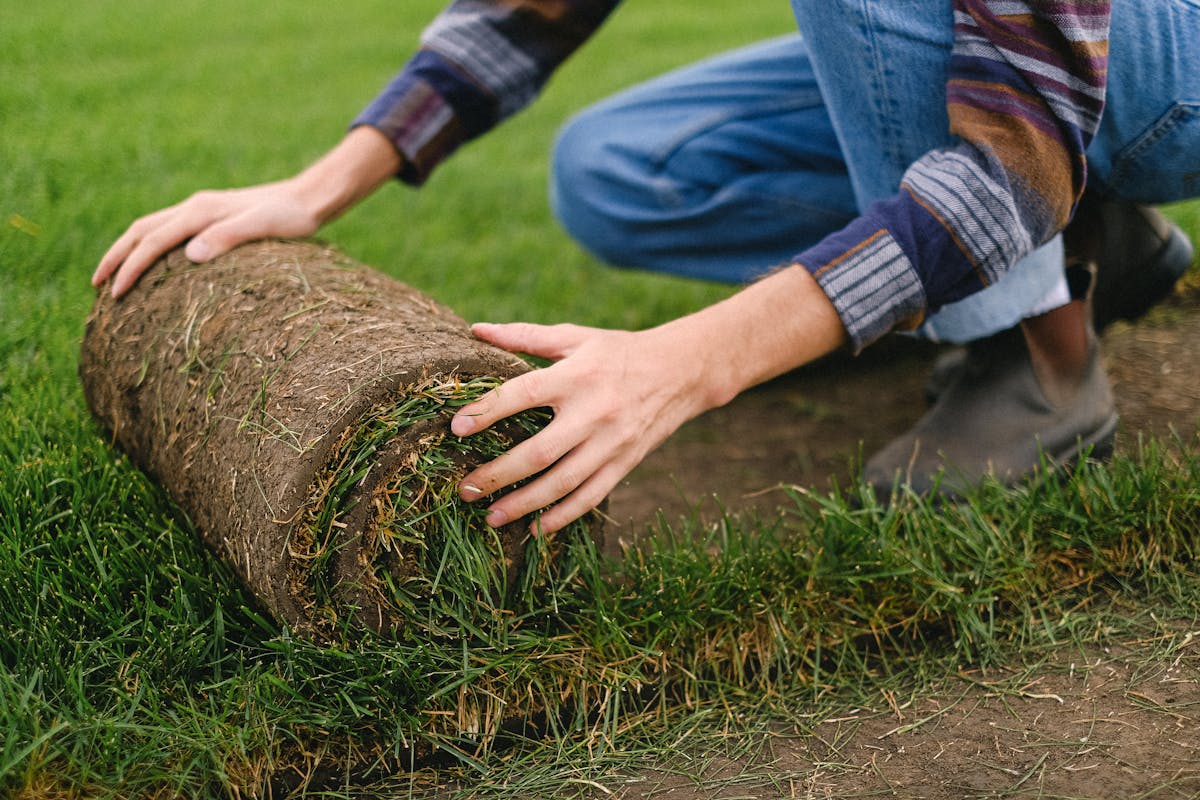
From seed. Spread screened topsoil over the graded area, rake it level, water it in, then sow. The grass seed calculator works out how much seed that area needs. If the existing soil is already reasonable, 2 inches worked into the surface does more for the grass than 4 inches sitting on top of compacted clay.
Before sod. Sod arrives with about an inch of soil attached, but still needs the same bed underneath to root into — raked dead level so the seams sit flat. Sod vs. seed covers the cost and timing trade-offs.
Bare patches. A thin layer, enough to give seed something to sit in. Loosen the surface, spread, sow, keep it damp — a handful of spots is a bags job, not a delivery job. Fall is the best time to do it.
Topsoil for leveling and topdressing
These two get confused constantly, but they are different jobs. Topdressing covers the whole lawn in a thin layer; leveling puts soil only where the ground dips.
Topdressing goes across the whole lawn, raked in until the grass shows through again. Thin enough that a 1,000 sq ft lawn takes only about 1.5 cubic yards — a bags job.
Leveling targets the dips instead. Fill in passes of no more than ½ inch at a time, letting the grass grow back between passes — grass buried under two inches in one go usually dies, and then you are reseeding a bare patch on top of the job you started. For one deep hollow, measure that hollow on its own.
How much does a yard of topsoil weigh?
Roughly 2,000 to 2,200 pounds — about one US ton. The spread is wide because weight depends almost entirely on how wet the soil is and what is mixed into it.
| Condition | Per cubic yard | In tons |
|---|---|---|
| Dry, freshly screened | ~2,000 lb | 1.0 |
| Typical, slightly moist | ~2,200 lb | 1.1 |
| Wet, or heavy with clay | 2,700–3,000 lb | 1.35–1.5 |
Published figures run from about 1,500 lb for very dry screened soil to 3,000 lb saturated. The same yard after a dry week and after a week of rain can differ by 500 pounds — which matters both for what a supplier selling by the ton charges you, and for what your vehicle can legally carry.
How many bags of topsoil are in a cubic yard?
A cubic yard is 27 cubic feet, so the bag count depends on bag volume — not the weight printed on the front.
| Bag size | Bags per cubic yard | For 3 yd³ | For 5 yd³ |
|---|---|---|---|
| 40 lb bag (0.75 cu ft) | 36 | 108 | 180 |
| 1 cu ft bag | 27 | 81 | 135 |
| 1.5 cu ft bag | 18 | 54 | 90 |
| 2 cu ft bag | 13.5 | 41 | 68 |
The common big-box bag is 40 lb holding about 0.75 cubic feet, so 36 fill a cubic yard. You will sometimes see 50 quoted — that comes from dividing 2,000 lb by 40 lb, which assumes bagged and bulk weigh the same per cubic foot. They do not: bagged topsoil is drier and lighter. Go by volume.
How much does topsoil cost, and how does it arrive?
| How you buy it | Typical US price |
|---|---|
| Bulk, screened topsoil | $20–$40 per cubic yard (range $12–$55) |
| Delivery | $50–$150 per trip, up to ~15 yd³ |
| Bagged topsoil | $2–$4.50 per cubic foot — $54–$120 per cubic yard |
A typical residential delivery of 3–10 cubic yards lands around $150–$600 all in. Prices vary enormously by region — treat these as a sense of scale, not a quote.
What fits in a truck
| Vehicle | Topsoil it will carry |
|---|---|
| Half-ton pickup | ~1 cubic yard |
| ¾-ton or 1-ton pickup | ~2 cubic yards |
| Small / single-axle dump truck | 5–7 cubic yards |
| Standard dump truck | 10–16 cubic yards |
Weight is the limit, not bed volume — a 16-yard body may only legally carry 12 or 13 yards of wet topsoil. Before it arrives, decide exactly where the pile should go — as close to the work as the truck can safely reach.
Topsoil vs. fill dirt, garden soil and compost
Four materials, four prices, four different jobs. A load of fill dirt where you wanted topsoil is not something you can fix with a rake.
| Material | What it is | Use it for | Not for |
|---|---|---|---|
| Topsoil | Upper layer of native soil, screened for stones and root | New lawns, leveling, filling beds, ground cover | Pots and planters — it compacts and drains poorly |
| Garden soil | Topsoil already blended with compost | In-ground beds you want ready to plant | Large volumes — you pay for the amendment across every yard |
| Fill dirt | Subsoil, no organic matter | Bulk filling, building up grade, backfilling | Anything you intend to grow in |
| Compost | Decomposed organic matter, no mineral soil | Amending — mixed into soil, or as a topdressing | The growing layer on its own; it shrinks dramatically |
| Potting mix | Peat or coir with perlite, no field soil | Pots, planters, containers | Ground-level work — too expensive, and it washes away |
Building up a base for a shed, path or patio rather than a growing layer? That is gravel rather than soil, and the gravel calculator works in the same yards, tons and bags.
Screened vs. unscreened. Screened topsoil has been run through a ½ or ¾ inch mesh to pull out stones and roots, so it rakes level and spreads evenly. Unscreened is cheaper and fine buried under a deeper fill. For a lawn, screened is worth the difference — or run a cheaper load through a rolling garden sifter yourself and keep the stones for drainage. Most yards will also sell a blend of roughly 70–80% topsoil to 20–30% compost — usually the better buy for a new lawn or bed. If you already have your own, work the compost in rather than laying it on as its own layer.
Frequently asked questions
How much topsoil do I need for 1,000 square feet?
How much does a yard of topsoil weigh?
How many 40 lb bags of topsoil are in a cubic yard?
How much is a yard of topsoil?
Is it cheaper to buy topsoil in bulk or in bags?
How deep should topsoil be for a new lawn?
Can I put topsoil over an existing lawn?
What is the difference between topsoil and fill dirt?
Related Posts
More from the Eartheasy library on preparing ground, feeding a lawn and working out how much material a job needs.